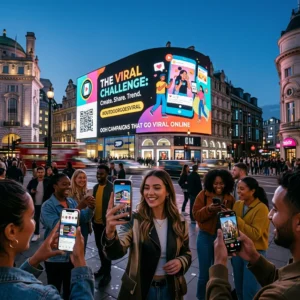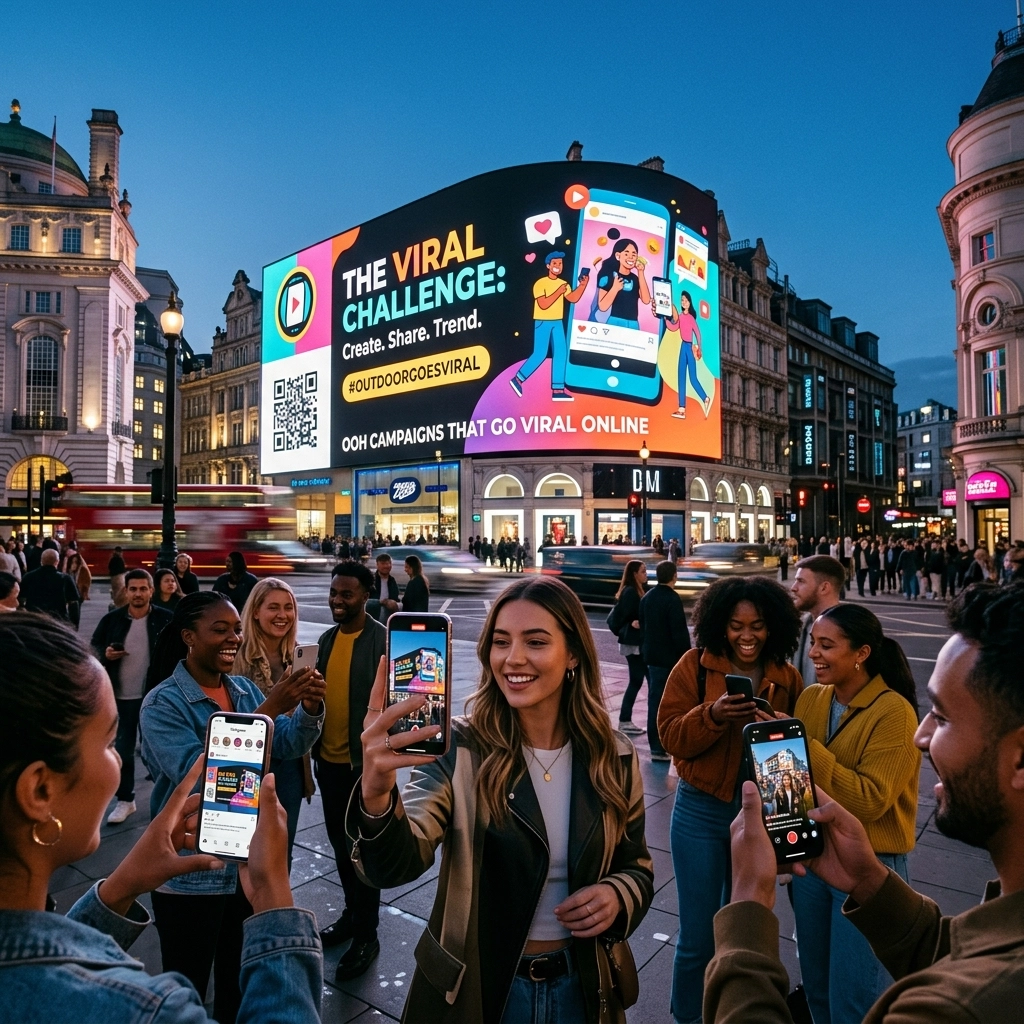
Imagine a single billboard in the heart of a bustling city. It doesn’t just sit there waiting for eyes to pass by; it demands them. Within minutes, a passerby pulls out a smartphone, captures a video, and uploads it to Social Media . By the afternoon, that video has three million views, ten thousand shares on X (Twitter), and a dedicated thread on Reddit.
The physical hoarding has officially transcended the street corner. It is no longer just “outdoor media”; it has become user-generated content (UGC).
In 2026, the most successful brands don’t choose between “offline” and “online.” They understand that viral OOH campaigns are the ultimate bridge between the two. When you design OOH for the street with the digital feed in mind, you unlock a level of brand authority that digital-only ads simply cannot replicate.
At Graphisads, we’ve guided the evolution of outdoor advertising. Today, we’re decoding how you can turn a static or digital display into a global digital sensation.
What Exactly is a Viral OOH Campaign?
A viral OOH campaign is a physical installation engineered specifically to trigger digital engagement. It leverages the “unmissable” scale of traditional media but optimizes the creative for social media billboard integration.
Instead of merely displaying a product shot, these campaigns use anamorphic 3D designs, interactive tech, or bold, provocative copy to force a “stop-and-stare” moment. The goal? To make the viewer feel like they’ve witnessed something spectacular enough that they must share it. This is the heart of phygital marketing: the seamless blend of physical presence and digital reach.
The Unbeatable Value of the “Phygital” Synergy
Why invest in making an outdoor ad go viral? Because when a consumer sees a brand in the real world and then sees it again on their social feed via a friend’s post, trust levels skyrocket.
Instagrammable outdoor ads provide a massive ROI boost. You pay for the physical placement in one location, but you reap the rewards of global impressions as the content spreads organically across borders. It’s a way to go big with hoarding advertising while keeping your effective cost-per-reach incredibly low.
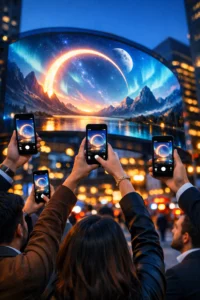
The Trends Driving the OOH Revolution in 2026
To win today, you must look beyond the standard vinyl print.
-
Anamorphic 3D and “Naked Eye” Displays: These DOOH interactive campaigns use forced perspective to create a 3D effect without glasses. They are inherently shareable because the visual “wow” factor is so high.
-
CGI “Fake” OOH (FOOH): Using AR or CGI to create outdoor ads that don’t actually exist in the physical world—like a giant bag rolling down a city street. Even though they are digital, their impact relies on the familiarity and authority of OOH locations.
-
Interactive and Multi-Sensory Elements: From billboards that dispense scents to vending machines that require a “social media check-in,” interactivity drives participation. When people participate, they document.
How to Design for the Feed: 5 Actionable Steps
Creating a viral sensation isn’t luck; it’s engineering. Use this checklist to ensure your next campaign is ready for the spotlight.
Step 1: Design for the “Smartphone Lens”
Your creative needs to look as good on a 6-inch screen as it does on a 60-foot hoarding.
-
Contrast is King: Use high-contrast colors that pop against the city skyline.
-
Minimalist Copy: If a user has to squint to read your message in a video, you’ve lost them.
-
The “Rule of Thirds”: Position your key visuals so they won’t be covered by TikTok’s “Like” and “Comment” buttons.
Step 2: Create a “Shareable Moment”
Ask yourself: Why would someone pull their phone out for this? Is it funny? Is it beautiful? Is it provocative? If it’s just informative, it won’t go viral. You need an emotional trigger. Integrating influencer campaigns with traditional OOH can kickstart this momentum.
Step 3: Leverage Location Context
The most viral ads interact with their environment. A billboard for a stain remover placed next to a “dirty” construction site creates a sense of real-time relevance that social media users love to capture.
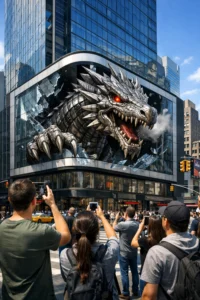
Step 4: Make it “Phygital” with QR and AR
Use QR codes to launch an AR experience that overlays digital art onto the physical world. This transforms a static image into a DOOH interactive campaign that lives on the user’s device long after they’ve walked away.
Step 5: The PR Push
Viral success is rarely 100% organic. Behind every “trending” billboard is a PR team sending “leaked” footage to publishers and tagging influencers. You must have high-quality video assets ready the moment the campaign goes live.
Case Study: The “Oreo Eclipse” Moment
The Execution: Oreo used digital billboards across the UK that synchronized with the real-time movement of a solar eclipse. As the moon covered the sun in the sky, a giant Oreo cookie “eclipsed” a digital sun on the screens. The Result: The campaign generated over 20 million views and 6,000 tweets within two hours. It was a perfect blend of location intelligence and creative timing.
FAQs: Mastering Viral Outdoor Media
-
Does every viral campaign need to be digital? No. Some of the most viral ads were static boards with incredibly clever copy or physical “stunts.” The idea goes viral, not the screen resolution.
-
How do we track success? We use social listening tools for hashtags alongside modern OOH attribution tracking like mobile geofencing to see how many people moved from “seeing” to “acting.”
-
Is it more expensive? Production might cost more, but the earned media value (free publicity) usually makes the cost-per-reach much lower than a traditional “safe” campaign.
Lead the OOH Revolution with Graphisads
The street is the new stage. In an era of digital fatigue, Viral OOH campaigns offer a breath of fresh air. They prove that your brand is not just another pixel, but a dominating presence in the real world.
Ready to turn your next campaign into a viral sensation? Connect with Graphisads today and let’s design OOH that the world can’t stop sharing.