Imagine a campaign where your design team never has to manually tweak a layout or translate a caption ever again.
Picture a scenario where a young professional in Bangalore sees an ad for high-end noise-canceling headphones during their morning commute, while a homeowner in Delhi is shown a promotion for smart home security during a local power shift—both generated instantly from a single creative master.
In 2026, this isn’t science fiction; it is the power of Dynamic Creative Optimization (DCO) 2026.
For CMOs and creative leads, the traditional workflow—spending weeks crafting thousands of static banners for different segments—is obsolete. It was a path to creative burnout. Today’s market demands omnichannel creative automation, giving brands the ability to occupy every screen with surgical relevance.
At Graphisads, we’ve guided the transition from legacy print to the frontier of programmatic creative. We understand that in 2026, the winners aren’t just those with the largest media spend; they are the brands with the most intelligent data integration.
What is Dynamic Creative Optimization (DCO)?
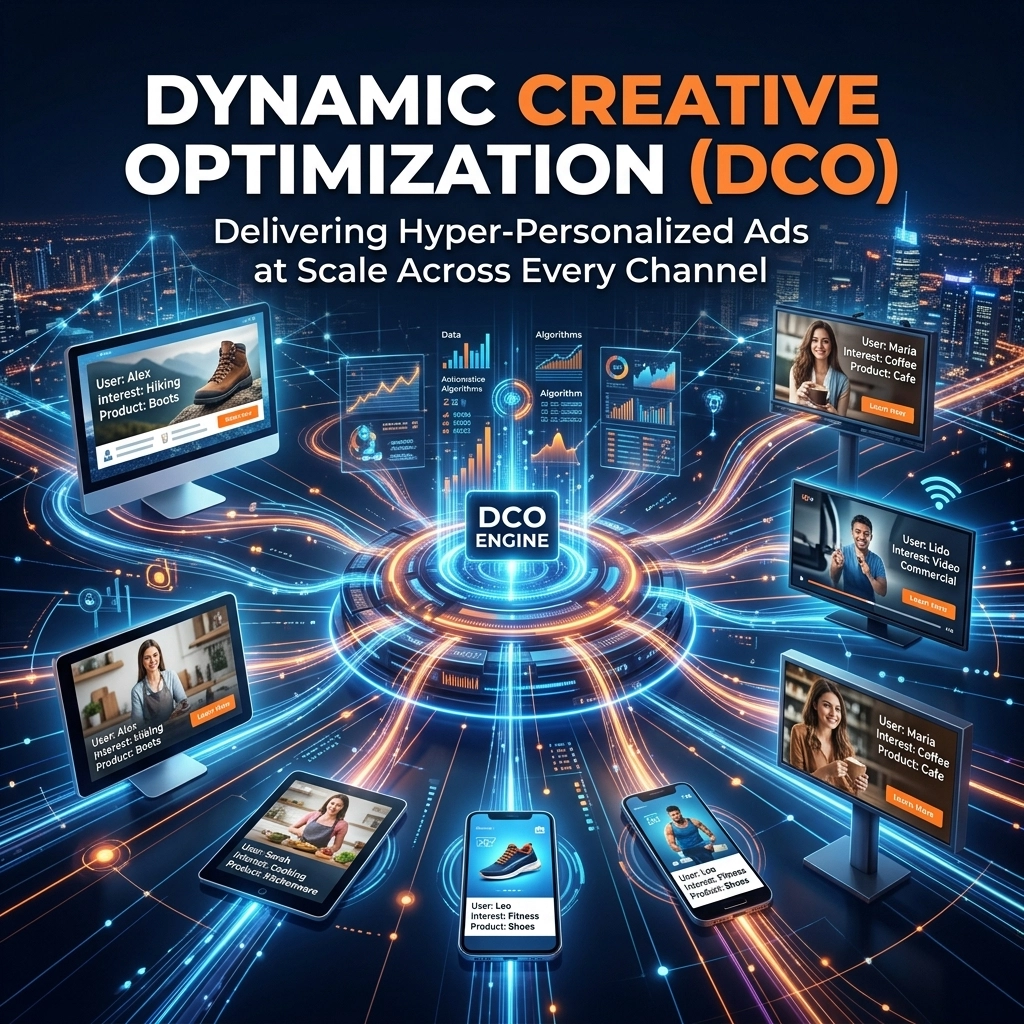
At its core, Dynamic Creative Optimization (DCO) is a sophisticated ad-tech solution that uses real-time data to customize the components of an advertisement. Rather than a “fixed” asset, DCO treats an ad as a collection of modular parts: headlines, imagery, product galleries, pricing, and CTAs.
When a viewer triggers an ad, the DCO engine scans environmental data—location, local weather, past browsing, device, or time—and assembles the most effective version of that ad in a fraction of a second.
The Blueprint of Real-Time Personalization
-
The Master Framework: A flexible design with “live” zones for content.
-
The Intelligence Feed: Connection to your inventory, weather data, or CRM.
-
The AI Decision Layer: Algorithms determine which combination will trigger a conversion for that specific individual.

Why a DCO Marketing Strategy is the 2026 Benchmark
The shift toward AI personalized advertising is driven by one word: Scale.
As a creative leader, your team’s genius should be spent on brand strategy and storytelling, not on resizing JPEGs for 50 different cities. DCO automates the “busy work.” By letting AI handle the variations, your human talent can focus on the big ideas that truly define your brand.
1. Unmatched Operational Efficiency
Static workflows are slow and rigid. DCO is fluid. You can launch thousands of data-backed variations across social, web, and Digital Out-of-Home (DOOH) without expanding your design department.
2. Enhancing Performance by 10-30%
Personalized content consistently beats generic ads. When a consumer sees a product they recently viewed, or a message that matches their current environment, engagement spikes. Data proves that DCO improves marketing ROI by 10-30% by eliminating irrelevant impressions.
3. Solving “Ad Fatigue”
We’ve all been haunted by the same static ad for weeks. DCO eliminates “banner blindness” by rotating elements for the same user. If a “Buy Now” button didn’t work, the system might swap it for “See the Collection” or change the background color next time to keep the experience fresh.
The Graphisads Edge: DCO Beyond the Browser
DCO isn’t just for web banners; its true potential is in omnichannel creative automation. Graphisads specializes in merging digital intelligence with physical presence.
-
Programmatic Video & CTV: In 2026, programmatic video ads on Smart TVs allow for localized “End Cards.” A viewer in Mumbai sees their local store’s address, while a viewer in Chennai sees theirs—all within the same high-def stream.
-
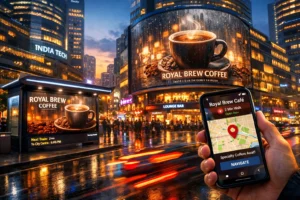
Next-Gen DOOH: Outdoor media has reached a new peak. Digital billboards can now adapt based on traffic. Heavy traffic? Show a detailed brand story. Fast-moving traffic? Switch to a bold, 3-word high-impact visual.
Roadmap: Implementing a Successful DCO Strategy
Follow these steps to move from static to smart:
-
Step 1: Inventory Your Data: What can you trigger? Use first-party CRM data, local weather APIs, or live stock levels.
-
Step 2: Design for Modularity: Shift from “final files” to “design elements.” Ensure your brand DNA is locked into the template so the AI never goes off-brand.
-
Step 3: Define the Logic: Create “If/Then” rules. “If it’s raining in Mumbai, show the raincoat creative.”
-
Step 4: Continuous Optimization: Programmatic creative learns. The system will automatically prioritize the combinations that convert best.
Case Study: A fashion brand launched a summer line across 20 Indian cities. Using DCO, headlines swapped between regional languages and backgrounds changed to local landmarks like India Gate. The result? A 45% increase in CTR and over 400 hours of design time saved.
Frequently Asked Questions (FAQs)
-
Is DCO too expensive for mid-sized brands? No. The efficiency in creative production hours often pays for the technology itself in the first quarter.
-
Does AI make ads look generic? Not with Graphisads. We lock your brand’s fonts and colors into the “Master Template” so every version looks premium.
-
Is it privacy-compliant in India? Yes. Modern DCO uses contextual data (location/weather) and first-party data, making it safer for the “cookieless” future.
Dominate the Future with Graphisads
Static advertising belongs in the past. In a diverse market like India, “one-size-fits-all” is a losing strategy. Dynamic Creative Optimization 2026 allows you to deliver hyper-relevant experiences at an impossible scale.
Elevate your presence. Empower your creative team. Partner with Graphisads to build a high-velocity, high-profit creative future.