Imagine a digital ecosystem where your potential customers find the perfect solution to their problems without ever landing on your website.
The year is 2026, and the mechanics of discovery have been completely rewritten. The era of scrolling through “Blue Links” is receding, replaced by a fluid, conversational interface that thinks, reasons, and summarizes. If your marketing team is still chasing legacy metrics like standard Click-Through Rates (CTR) and keyword positions in a 10-blue-link list, you are optimizing for a ghost town.
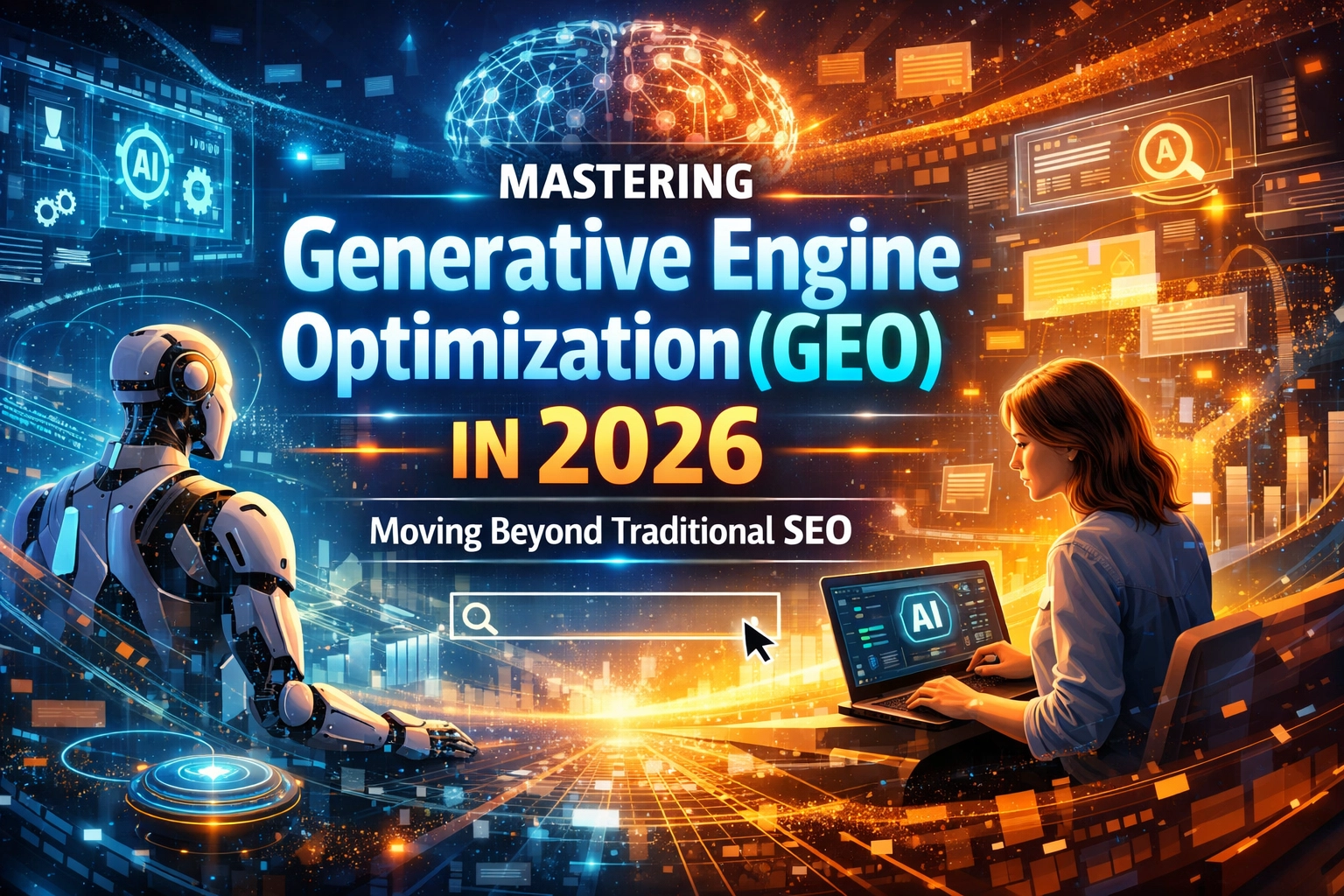
Welcome to the frontline of Generative Engine Optimization 2026 (GEO). This isn’t a mere update to SEO—it is a paradigm shift in how brands build prestige and secure visibility in an AI-curated world. For agency leaders and CMOs, the mission has shifted: it’s no longer about “ranking,” it’s about becoming the citation.
The Evolution of Discovery: Why “The Click” is No Longer King
For nearly thirty years, SEO was a battle for real estate in a vertical list. Today, platforms like Gemini, Perplexity, and ChatGPT have rewired user intent. Instead of grazing through multiple tabs, users demand synthesized, instant intelligence.
Generative Engine Optimization 2026 is the strategic refinement of your brand’s digital identity so that Large Language Models (LLMs) recognize you as the ultimate source of truth. When an AI generates a complex response, GEO ensures your brand is the one it credits, links, and validates.
The data is transformative. While AI-driven search behavior has contributed to a notable dip in traditional organic site visits, the premium on an “AI endorsement” has never been higher. Being the cited expert in a generative summary is the new “Position One.”
SEO vs. GEO: A Comparison of Two Eras
Traditional SEO optimized for crawling bots; GEO optimizes for reasoning engines. These systems don’t just count keywords—they evaluate the logic, depth, and structured authority of your data.
| Dimension | Traditional SEO | Generative Engine Optimization (GEO) |
| Primary Objective | Appear at the top of a search list | Be the featured source in an AI answer |
| User Journey | Click, explore, and convert | Receive, trust, and engage |
| Core Metric | Click-Through Rate (CTR) | Brand Citation Share & Entity Authority |
| Strategic Focus | Keywords and Backlink Volume | Structured Data and Fact-Dense Content |
Entity Trust: The Foundation of AI Authority
In a world plagued by AI “hallucinations,” LLMs are programmed with a bias toward high-trust entities. This is where your physical-world footprint becomes a digital superpower.
At Graphisads, we’ve spent half a century anchoring brand trust across the Indian subcontinent. From high-impact outdoor media campaigns in Delhi and Mumbai to digital-out-of-home (DOOH) innovations, our physical ubiquity creates a “Brand Entity” that AI models perceive as reliable and established.
When an engine like Perplexity parses the web, it doesn’t stop at your homepage. It weighs historical records, news mentions, and your offline market dominance. A brand with 50 years of heritage in the Indian advertising sector possesses a natural Answer Engine Optimization edge that a “pop-up” digital brand cannot simulate.
The LLM Blueprint: Strategies to Get Your Brand Cited
To dominate Generative Engine Optimization 2026, your content must be architected for both human expertise and machine ingestion. Here is the roadmap:
-
-
Prioritize Narrative Directness
AI Overviews reward clarity. Adopt a “Result-First” structure: provide the definitive answer in the opening sentence, followed by the “how” and “why” in subsequent layers.
-
Integrate Physical-World Proof
AI models thrive on multi-modal data. High-visibility physical assets, such as Vande Bharat train branding, act as powerful signals of legitimacy. When your brand is physically present, AI engines are more likely to treat your digital claims as factual.
-
Deploy Semantic Schema Markup
Technical SEO has moved toward “Entity Mapping.” Use advanced Schema.org code to explicitly define your brand’s relationship to specific industries and services, helping AI connect the dots between your expertise and the user’s query.
-
Publish Proprietary Data
LLMs are hungry for “original facts.” By publishing unique industry research and statistics, you make it impossible for an AI engine to answer a query without citing your original study.
-
360-Degree Visibility: The Omnichannel Advantage
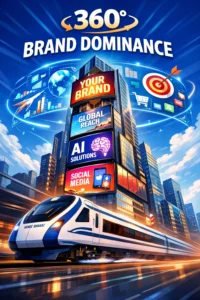
True market leadership in 2026 requires a bridge between the physical and the virtual. We call this 360 Visibility.
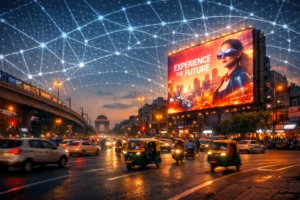
Picture a decision-maker commuting through Bangalore. They pass a massive, strategically placed billboard managed by our outdoor media experts. That evening, when they ask a voice assistant for a vendor recommendation, the AI—recognizing the brand’s heavy market presence and optimized GEO data—cites you as the “regional leader.” This reinforcement is the secret to modern brand growth.
Success Story: Scaling a Fintech Powerhouse
The Challenge: A digital finance firm needed to break through the noise in the “AI-driven wealth management” space.
The Strategy:
-
Offline: Used high-frequency transit advertising on the Vande Bharat Express to build mass-market entity trust.
-
Digital: Restructured their blog into a “Knowledge Base” optimized for LLM content strategies.
-
GEO: Implemented technical “Entity SEO” to ensure they were the primary reference for AI-summarized financial queries.
The Impact: Within two quarters, the brand was cited in over 60% of AI-generated summaries for their niche, resulting in a 35% surge in direct brand searches despite a decline in traditional link clicks across the sector.
Be the Answer, Not Just a Link
The transition to Generative Engine Optimization 2026 isn’t a hurdle—it’s a filter that rewards the most authoritative brands. By leaning into structured data and real-world trust, you ensure your brand isn’t just found; it’s referenced.
At Graphisads, we merge five decades of media heritage with forward-thinking AI strategies. Whether you need the perfect billboard location or a full-scale GEO transformation, we deliver the 360-degree visibility required for the AI era.
Is your brand ready to be the definitive answer?
Frequently Asked Questions (FAQ)
How does GEO differ from traditional SEO?
Traditional SEO aims for link placement. Generative Engine Optimization (GEO) focuses on becoming the narrative source that an AI assistant uses to construct its answer.
What is the role of RAG in AI Search?
Retrieval-Augmented Generation (RAG) is the process AI uses to pull real-time data from the web. To win here, your content must be factually dense and formatted in a way that AI “retrievers” can easily extract.
Why does offline advertising matter for AI?
AI engines verify digital claims against real-world data. Brands with significant offline presence (like outdoor billboards and news coverage) are viewed as more “stable entities,” which increases their likelihood of being cited.
Will I still need a website?
Absolutely. Your website serves as the “source of truth” for the AI. However, your goal shifts from hosting visitors to providing the data that powers AI summaries.
How does Graphisads bridge the gap?
We create a feedback loop between high-impact physical media and digital authority. By boosting your brand’s “Entity Trust” through massive public campaigns, we provide the signals AI needs to rank you as a market leader.
Don’t let your brand get left behind in the “No-Click” era. Elevate your presence today.