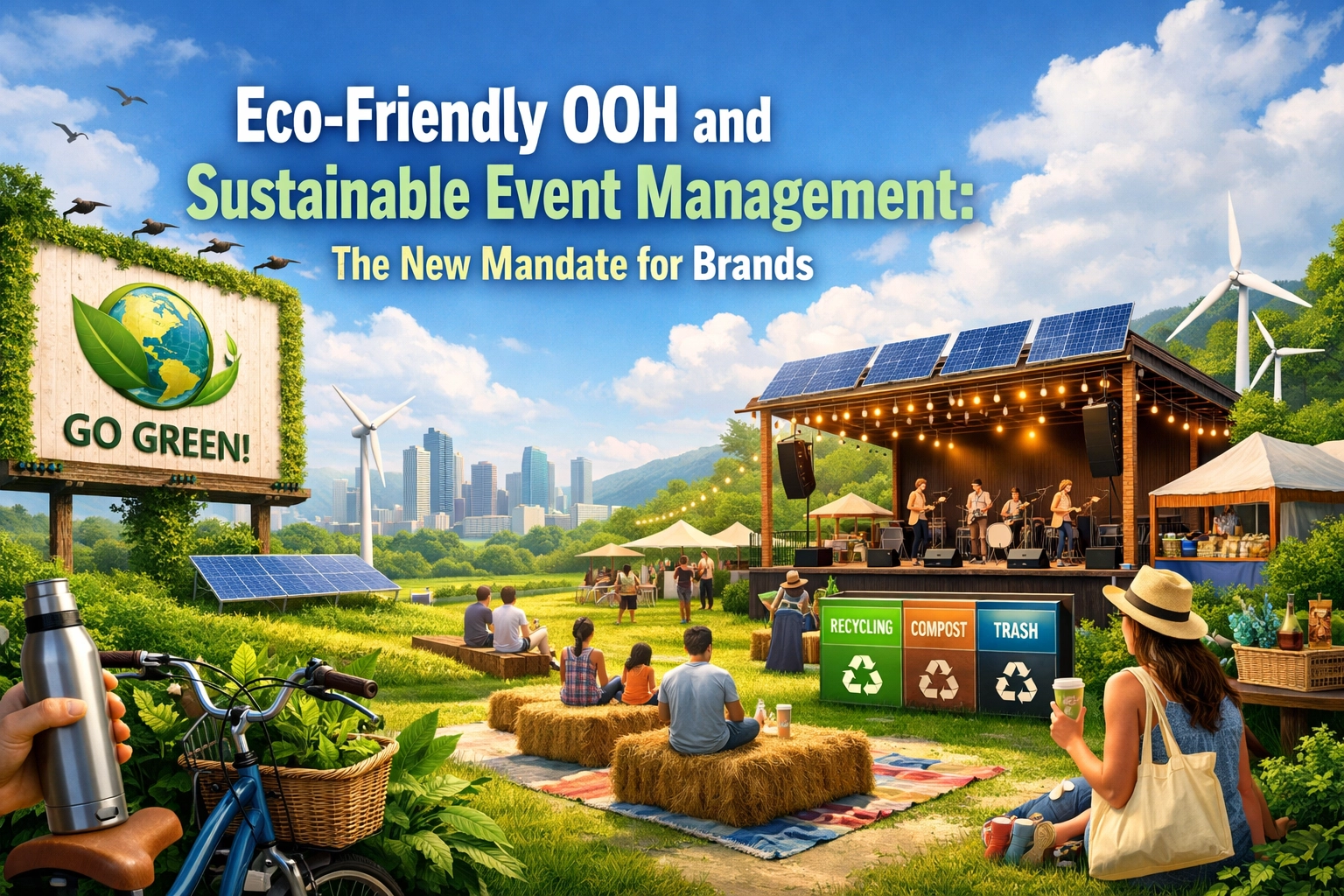
Imagine a world where your brand’s larger-than-life presence doesn’t just capture eyes: it honors the environment.
Imagine a massive billboard in the heart of Mumbai or a high-traffic installation in Delhi NCR that powers itself through the sun and leaves zero chemical footprint behind.
For decades, the advertising industry was defined by high-impact visuals and massive physical waste. But as we navigate 2026, that narrative has fundamentally shifted. Today, sustainable advertising in India is no longer a “nice-to-have” or a niche CSR project. It is a strategic mandate.
At Graphisads, with our 50-year legacy of shaping the Indian media landscape, we have witnessed this evolution firsthand. The transition from traditional flex to eco-friendly billboards and green event management is the next chapter in our journey of innovation and excellence.
For Corporate Communications heads and CSR directors, the goal is clear: align your marketing spend with your corporate sustainability goals 2026.
What is Sustainable Advertising in India?
Sustainable advertising is the practice of conceptualizing, producing, and displaying brand messages with a minimal environmental footprint.
In the context of Out-of-Home (OOH) media, this translates to a radical overhaul of materials, energy consumption, and disposal methods. It means moving away from single-use plastics and high-carbon logistics toward a circular economy model.
Sustainable advertising India now encompasses everything from the physical substrate of a billboard to the digital efficiency of a screen. It is about transparency, accountability, and the intelligent use of resources.

The Pillars of Eco-Friendly OOH
To achieve true sustainability, brands must look at the three core pillars of outdoor advertising: materials, energy, and end-of-life management.
1. PVC-Free Flex Printing
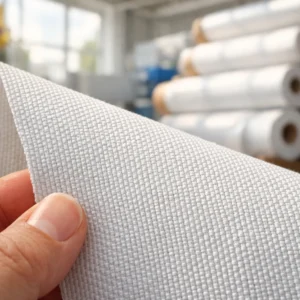
For years, Polyvinyl Chloride (PVC) was the industry standard for high-impact banners. It was durable but ecologically devastating. The move toward PVC-free flex printing is the single most important change in physical OOH today. These new materials are often made from high-density polyethylene (HDPE) or specialized fabrics that are 100% recyclable and produce no toxic fumes when disposed of.
2. Smart Energy Systems
Digital Out-of-Home (DOOH) is rapidly expanding, and it is projected to account for over 40% of total outdoor ad spend by 2026. While digital screens eliminate physical waste, they consume energy. The solution? Smart billboards equipped with light sensors and AI-driven power management that dim screens during late-night hours or low-traffic periods to save electricity.
3. Sustainable Marketing Materials
Beyond the board itself, the entire ecosystem: from the mounting structures to the inks used in printing: must be scrutinized. Water-based or soy-based inks are replacing solvent-based alternatives, reducing the release of Volatile Organic Compounds (VOCs) into our cities’ air.
The Future of DOOH: Digital Efficiency as a Sustainability Tool
Many believe digital displays are less “green” than static ones, but the reality is more nuanced. When you choose Digital Out-of-Home advertising, you eliminate the need for printing, transporting, and disposing of thousands of square feet of material for every campaign change.
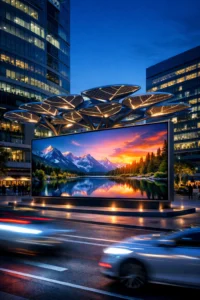
At Graphisads, we are integrating energy-efficient LED technology with renewable energy sources. Solar-powered installations are becoming the hallmark of smart billboards in Delhi NCR and beyond. By combining these with real-time data analytics, brands can ensure their messages are only displayed when and where they have the most impact, drastically reducing “waste” exposure.
Our work with high-tech transit media, such as Vande Bharat Express trains, also highlights a shift toward cleaner, more modern advertising environments that naturally align with green transit initiatives.
Sustainable Event Management: The New Benchmark
OOH is only half the story. Large-scale corporate events have traditionally been major generators of waste. From discarded stage sets to printed brochures, the environmental cost of a three-day summit can be staggering.
Green event management is the answer for CSR directors looking to maintain their ESG (Environmental, Social, and Governance) integrity.
How to Host a Sustainable Event in 2026:
- Zero-Waste Set Design: Use modular, reusable stage structures instead of single-use timber and plastic.
- Digital Collateral: Replace printed booklets with QR-code-driven digital experiences.
- Eco-Friendly Signage: Utilize recycled boards and non-toxic printing for all on-site branding.
- Carbon Offsetting: Calculate the travel and energy footprint of your event and invest in local reforestation or renewable energy projects to balance it out.
Aligning with Corporate Sustainability Goals 2026
Large enterprises in India are now under intense pressure from stakeholders to meet strict ESG targets. Your marketing department cannot be an outlier in this mission.
When a brand chooses sustainable advertising India, it isn’t just buying space; it’s buying credibility. Consumers are increasingly savvy. They notice the difference between a brand that talks about sustainability and a brand that displays its message on a recycled, solar-powered board.
By partnering with an experienced agency like Graphisads, you ensure that your brand’s “larger-than-life” presence is backed by a “smaller-than-ever” environmental footprint. We help you navigate the complexities of procurement and reporting, ensuring your media spend directly supports your sustainability disclosures.
5 Steps to Transition Your Brand to Eco-Friendly OOH
- Audit Your Current Media Mix: Identify how much of your current OOH spend relies on non-recyclable materials.
- Request PVC-Free Options: Make PVC-free flex printing a non-negotiable requirement for your static campaigns.
- Leverage DOOH Strategically: Use digital screens for high-frequency updates to avoid the waste associated with repeated manual re-skins.
- Incorporate Solar Power: Look for prime locations in Mumbai, Bengaluru, and Delhi that offer solar-augmented power systems.
- Measure and Report: Work with your agency to quantify the carbon savings achieved through green materials and energy-efficient displays.
Case Study: Leading the Green Revolution in Urban Media
Goal: A leading global tech giant wanted to launch a nationwide campaign across 10 Indian metros while adhering to their “Net Zero by 2030” commitment.
Execution:
Graphisads developed a hybrid OOH strategy. In Tier 1 cities, we utilized 100% PVC-free flex printing on high-impact sites. For their flagship presence in Delhi NCR, we deployed three solar-powered smart billboards that utilized light sensors to optimize energy consumption. All on-ground launch events were executed using green event management principles, featuring recycled aluminum structures and digital-only guest kits.
Result:
The campaign reached an estimated audience of 45 million people. More importantly, it saved an estimated 12 tons of plastic waste and reduced the campaign’s energy-related carbon footprint by 35% compared to their previous year’s launch. The client’s CSR report featured the campaign as a benchmark for sustainable marketing.
Frequently Asked Questions
Is sustainable advertising more expensive?
While some eco-friendly billboards and materials carry a slight premium (typically 10-15%), the cost is often offset by the long-term value of brand reputation and the reduction in disposal costs. Furthermore, as demand for PVC-free flex printing increases, costs are rapidly normalizing.
Is the quality of PVC-free prints as good as traditional flex?
Absolutely. Modern sustainable materials provide the same vibrant color reproduction and weather resistance as traditional materials. Your brand’s visuals will remain sharp and unmissable, regardless of the weather in Mumbai or the heat in Delhi.
How do I verify that my agency is actually using sustainable practices?
Look for transparency in their supply chain. At Graphisads, we provide clear documentation on the materials used and can facilitate audits for your CSR reporting. You can learn more about our commitment to transparency and governance on our Audit Committee page.
Can sustainable OOH be tracked?
Yes. Sustainable OOH, especially DOOH, can be integrated with mobile location data and smart sensors to provide accurate analytics on reach and engagement, making it as measurable as any other digital channel.
Elevate Your Presence, Protect the Future
The “New Mandate” for brands is simple: grow your influence without growing your footprint.
As the landscape of sustainable advertising in India continues to evolve, your choice of partner becomes your most important decision. You need an agency that combines 50 years of “ground-reality” experience with a visionary approach to green technology.
Are you ready to lead the revolution and make your brand a beacon of sustainability?
Connect with Graphisads today and let’s build a greener, more impactful future for your brand.